 by
by 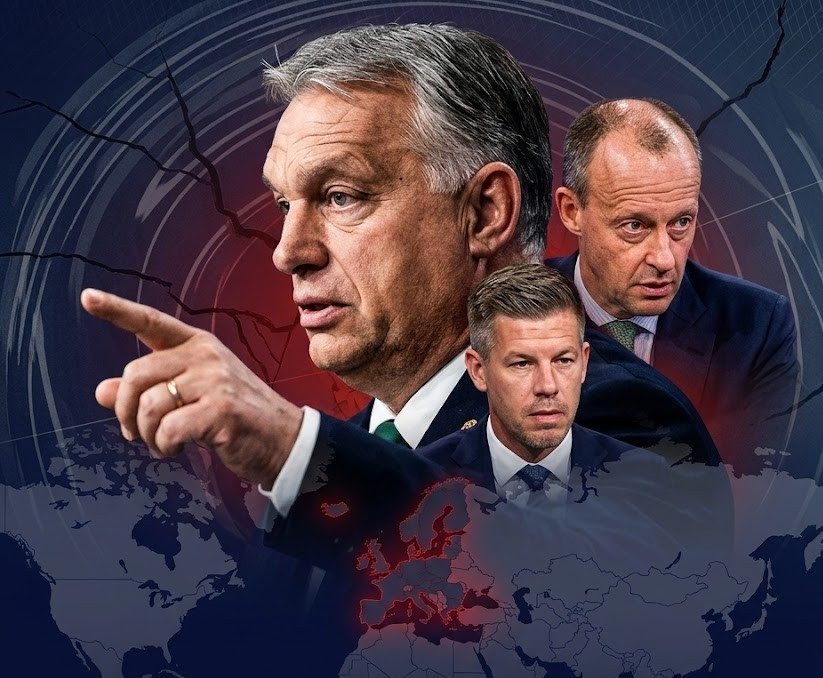
A heated political debate is intensifying across Europe as Hungarian Prime Minister Viktor Orbán re-emerges at the center of the continent’s most divisive issue: the European Union’s Migration Pact.
Supporters describe the moment as a turning point for EU governance and border control. Critics, however, warn it represents a deeper shift toward centralization in Brussels and a gradual erosion of national sovereignty.
The controversy is unfolding just as the pact moves toward implementation and European political alliances begin repositioning ahead of key EU-level meetings.
ORBÁN’S POLITICAL COMEBACK AND STRATEGIC MESSAGE
Orbán is portrayed by allies as reasserting himself on the European stage, framing his participation in upcoming Brussels discussions as a renewed push against centralized EU authority.
His political messaging focuses on:
- Restoring national decision-making power
- Rejecting mandatory migration redistribution mechanisms
- Strengthening external EU borders instead of internal quotas
- Building alliances among nationalist and sovereignty-focused parties
His supporters argue that his return signals resistance against what they describe as an increasingly centralized European Union.
EU MIGRATION PACT: CORE STRUCTURE AND CONTROVERSY
At the center of the debate is the European Union Migration Pact, a wide-ranging legislative package aimed at reforming migration and asylum policy across member states.
Main pillars of the pact:
- Border protection: stronger enforcement of EU external borders
- Digital oversight: expanded use of migration tracking systems
- Asylum reform: faster processing and cooperation with third countries
- Relocation mechanism: redistribution of asylum seekers among EU states under a “solidarity” principle
While EU institutions present the pact as a necessary modernization of migration governance, critics argue that the “solidarity mechanism” functions as a de facto quota system.
DIVIDED EUROPE: NATIONAL POSITIONS EMERGE
The migration debate has sharply divided EU member states.
Some countries, including Poland, the Czech Republic, Croatia, and Austria, are reported to have negotiated exemptions from parts of the framework.
Meanwhile, major political friction remains in:
- Germany, where migration policy remains politically sensitive
- Hungary, where opposition to the pact is central to government messaging
- Several Western European states pushing for stronger centralized coordination
POLITICAL ALLIANCES AND THE “PATRIOTS FOR EUROPE” PUSH
Orbán has also been linked to efforts to strengthen cross-border political cooperation among nationalist and sovereignty-focused parties.
This includes the emerging cooperation platform often referred to as “Patriots for Europe”, bringing together groups such as:
- Fidesz
- Freedom Party of Austria (FPÖ)
- Other like-minded conservative and nationalist movements in Europe
The stated goal of these alliances is to resist deeper EU centralization and defend national cultural and political autonomy.
MEDIA, FRAMING, AND POLITICAL NARRATIVE WARFARE
A key layer of the debate is the role of media framing.
Supporters of Orbán argue that mainstream European media often underrepresents sovereignty concerns and overemphasizes pro-integration narratives.
Critics counter that such claims are part of a broader political strategy to delegitimize EU institutions and weaken collective solutions to migration challenges.
This has created what analysts describe as a parallel narrative struggle:
- One side emphasizing unity and regulation
- The other emphasizing sovereignty and national control
KEY DATES AND UPCOMING FLASHPOINTS
- June 12: Formal activation phase of the EU Migration Pact framework
- June 17–18: High-level EU leadership meetings in Brussels expected to intensify debate
These dates are expected to serve as major political pressure points for both supporters and opponents of the reform.
BIG QUESTION: WHAT COMES NEXT FOR EUROPE?
The core tension remains unresolved:
- Should migration policy be centrally coordinated at EU level?
- Or should individual member states retain full control over borders and asylum systems?
As Orbán and his allies intensify their campaign, the outcome of this debate could shape the future balance of power inside the European Union itself.
